Showing posts with label 1989. Show all posts

22.4.10

EMMANUEL, “LA CHICA DE HUMO”

30th December, 1989


And so we say farewell to the 1980s, never to return unless something very unexpected indeed happens in the upcoming years. This song was at the top of the Billboard Latin chart as the decade turned over from 1989 to 1990, and like any user of symbol and myth, I've tried to find things about it that echo whatever significance that particular turnover on the chronological odometer might have had. All I've really been able to come up with is that this is the first song we've heard so far that would have been unimaginable without hip-hop. The jacking, stuttered beat, the synthesized horns and bass working as a digitized memory of funk, and the dreamy house piano lines all fade irresistibly from the late 80s into the early 90s. In fact it reminds me, with my early ignorance and limited exposure to pop music, of nothing so much as the first DC Talk record (the one with "Heavenbound" on it), though better-produced and more fragrantly alive.

The title translates to "The Girl Of Smoke," and the sucked-in breath which opens the song, inevitably evokes a specific source of smoke to anyone keyed into the popular culture of the last forty years — but the lyrics, unless I'm missing some subtext somewhere, aren't about pot. If anything, the central metaphor is tobacco; the girl burns, soothes, flirts, evaporates. She's smoke because he can't hold onto her; she's mercurial, even fatal, but he's addicted; when he insists that "no me va a transformar en crucigrama viviente" ("she won't change me into a living puzzle"), the boast rings hollow.

A lot of the songs we've looked at recently have been about fascinating, even mythic, women, the belles dames sans merci of medieval, Gothic, and noir narratives. Which is a perfectly satisfying story for adolescent males to tell themselves — certainly it was a useful myth in my own youthful crushes, the cruel but distant goddess who I could obsess over without having to acknowledge as actually being human — but after a while, as these portraits start piling up indistinguishably, it begins to look more like misogyny than hopeless romanticism. Taken at face value, Emmanuel's declarations are standard lover's woes; but within the context of a narrative matrix in which all women are predatory, congenitally faithless beings tempting young men to destruction, he's a little less sympathetic.

Which is fine — his vocal performance, vacant and barely there, fading exhaustedly towards the end of each line, isn't geared towards sympathy anyway. This is primarily a dance song, and the triumphal boogie of the music is at odds (though not really in such a way as to inspire alternate readings) with the paranoid misery of the lyrics. The synth sounds are cheap and obvious and splashy — very Casio, very 1989 — and it's the synthetic fanfares and the way his voice reaches up into the caress of "ahh-aaaahh" that stick in the memory, not the clipped, accusatory verses.

On a more meta note, it's taken a long time for me to get this one up not because I didn't have anything to say about it but because I've been "busy" with other things. ("Busy" = sure, I could have made the time, but this project isn't the kind of thing that brings immediate and obvious rewards.) As we head into the 90s, I'm planning on tweaking the format slightly to make it easier to get through the patches where I'm not totally enthused about the material. This means shorter writeups — blurbs, as we say at the Singles Jukebox — and hopefully more frequent postings. Of course, if there's mass outrage at the change . . . .

19.4.10

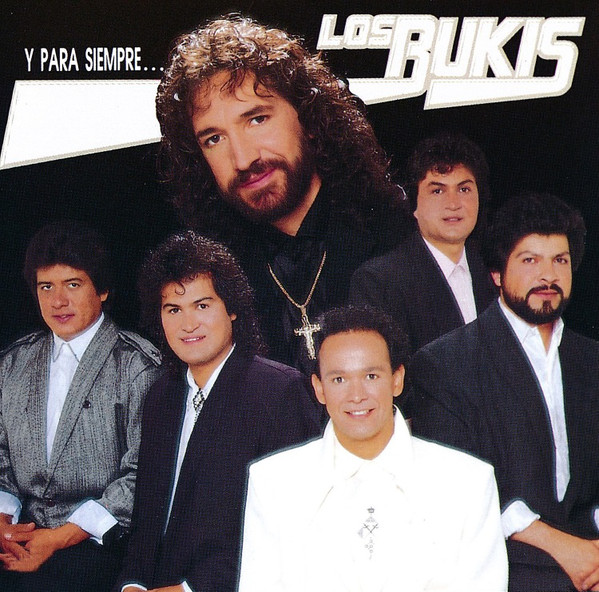
LOS BUKIS, “CÓMO FUÍ A ENAMORARME DE TÍ”

9th December, 1989


There's something about Los Bukis that makes it hard for me to even want to grapple with their music. Not hard to listen to their music — it goes down easy, just like it was made to — but to pay attention to it and consider it and give it due weight and render a fair and sober judgement. This isn't even about how I don't like it. I like it fine! Or I would if I had any thoughts about it at all. Instead I spent their last appearance talking about them (not the song) and now I'm spending this one talking about me (not the song).

As has become my habit, I translated the lyrics into English in a Notepad document before opening this post, just so I could make sure I wasn't missing anything important. I wasn't — they're standard bleeding-heart lyrics about the anguish of unrequited love, with one or two nice images and a whole lot of standard lines. I bet this is a great song to blast at full volume in your room or your car when la única chica no te quiera, but without that motivating emotional hook, it only rings bombastic and faintly ridiculous to me now.

This is the third ballad in a row with an electric guitar solo, which means I'm pretty dumb, but it also means that we're definitely turning into the 90s now. I remember early-90s ballads as being chock full of pointless electric guitar solos (most egregiously on the Vanessa Williams/Brian McKnight duet "Love Is"), and at least as far as Latin Pop goes, that's looking like a trustworthy memory.

And I think that's all I have to say. Next time I'll try to talk about the actual music; I just have to post this so I can get past it and jump-start this blog again.

15.4.10

CHAYANNE, “FUISTE UN TROZO DE HIELO EN LA ESCARCHA”

4th November, 1989


The second temperate ballad in a row to be interrupted by a flash of electric-guitar wizardry; is this a slow-rolling sea change, or merely something which had never before bobbed to the surface? But comparisons with the Luis Miguel song which preceded it are not likely to be very fruitful; after all, once you've noted the difference in the singing styles (Miguel: all-out passion, Chayanne: so sweet as to maybe be called simpering), the similarities in topic (both are anguished farewells to dangerously fickle women that use images of ice and treachery), and a general structural similarity (which either of them would share with ninety percent of ballads produced in the last quarter of the century), what's left to compare?

That's meant for humor. Unfortunately there is a sameness to much of the music we've been discussing over the past several months, a sameness which stands out all the more to ears that have not really been trained to pick out the nuances, and who hasn't followed the breathless press about each new estrella fabulosa. But Chayanne's going to be around a while; let's see what there is to know about him.

He's of the same generation of pop stars as Luis Miguel; when Miguel had his first #1, Chayanne was right behind him at #4. If his own summitting took a little longer, well, he had more irons in more fires. As un estrella de pop puertorriqueño, he also got jobs in the island's telenovela industry. We'll get to his crowning glory in that field -- in fact, one of the absurd crowning glories of all Latin pop culture -- in a few years' time, but for now, note that his dreamy swoon-worthiness is as much televisual as musical. Also, his birth name was Elmer.

I'd engage the song more, but the snark above pretty much nailed it. I'll just translate the title as per usual: "You Were A Piece Of Ice In The Frost." Which sets us up for a much more poetic lyric than the one we actually get, but pop has always been as much about hollow promises as about glory fulfilled; frequently more so.

12.4.10

LUIS MIGUEL, “FRÍA COMO EL VIENTO”

21st October, 1989


I may just be balladed out. But it's difficult for me to hear much in this song except a lot of grimacing emoting, which the video bears out. (Luis Miguel watch: it was clearly shot before the one for "La Incondicional," as witness his uneven mop of hair, and I'm left wondering if was promoted first but took longer to get to the top, thanks to the vagaries of the airplay market.) The backing is thin and conventional, the only faint surprise being a brief electric guitar solo, which is quickly replaced by a saxophone.

That solo is hardly revolutionary or even interesting by Anglo pop standards, but the electric guitar could have decadent, imperialist-American connotations in much of Latin America up through the 80s. Rock en Español was far more upsetting in the context of its home audience in the 80s and 90s than the Anglophoners who embraced it with a patronizing "about time you caught up" air (even as rock lost unrecoverable ground in England and America) could possibly have understood. But we'll have plenty of time to explore that later; for now, just note the almost dangerous sophistication it represents in this song.

The dangerous sophistication, it is to be understood, is not on the part of Miguel himself, who is a nearly invisible presence in his own song. (At least as much as he can be, with that creamy voice emoting so hard all over the place.) The lyrics place an unknowable, untouchable woman at the center, and wind so thickly around her in metaphor and simile that seeing the anonymous model-dancer in the video is an inevitable letdown.

The title translated to English is "Cold As The Wind," and the chorus continues, "dangerous as the sea/sweet as a kiss/Don't let yourself love, because/I don't know if I have you/I don't know if you come or go/You're like an unbroken colt." (Luis Miguel expressing iffy sentiments about women watch: are those supposed to be good things or bad?)

As has been the general rule throughout this travelogue, romantic sentiments inevitably sound even more romantic (or ridiculous!) when written in Spanish, because they're expressed in idioms and images which are unfamiliar or old-fashioned in English. An English-language power ballad about a "cold," "vain, capricious, ideal" woman would be unlistenable; in Spanish, the language is only slightly more heightened than normal for pop.

8.4.10

GLORIA ESTEFAN, “SI VOY A PERDERTE”

16th September, 1989


Notable firsts watch: this is the first song we've encountered that simultaneously went to #1 on the Hot 100 (the main Billboard pop chart). Niggling caveats watch: "Si Voy A Perderte" isn't quite the same song as "Don't Wanna Lose You," despite having the same backing melody, the same backing track, and even the same competent-but-bland performance from Estefan. Also, "Don't Wanna Lose You" spent only a week at #1, her fifth top-ten entry since 1987, while as if to make up for her previous absence from this travelogue, she spends a solid month at the top of the Hot Latin tree.

For this is also our first encounter with the woman who most readily comes to mind if you say the words "80s Latin" to an American pop fan. We're almost done with the 80s, of course; but in a lot of ways this song sounds like the first of the 90s to me.

You see, my memory of the 90s is as much Adult Contemporary ballads as it is grunge, g-funk, or garage. (In order: quite a lot, a bit, not at all.) And only people who have never seriously listened to a ballad — instead of just hearing them and seething, or whatever — could imagine that the conventions of the form haven't changed, sometimes quite dramatically, over the years. The hushed verse/soaring chorus Estefan employs here isn't precisely a new idea, but the miles of space within the production, everything polished to a carefully tasteful sheen, is, at least in the Latin provinces. In other realms of the pop universe earlier in the decade, it was called sophisti-pop; as the 80s wheeled gracefully into the 90s, it became simply The Way Pop Gets Done.

But I started to talk about the difference between this and "Don't Wanna Lose You Now." I'm assuming you've heard "Don't Wanna Lose You Now" — in waiting rooms, if nowhere else — and it is, as I'm sure you know, a fine-to-middling example of the Dance-Pop Diva Sings A Ballad of the era. (See also: Paula Abdul, Janet Jackson, even on occasion Madonna.) The title says it all: she don't wanna lose you now, you're gonna get through somehow, she don't wanna lose you now (or ever), baby she's finally found the courage to stand her ground, etc., etc. As a vaguely empowering "we can make this work" anthem, it's fairly rote; as an sample of the Inspirational Pop of the period, it's Why Grunge Had To Happen. (That's, um, a joke. No letters, please.)

But the Spanish-language version (written, as was the "original," by Estefan herself) is something else. The differences in the title reflect the differences in the song: "Si Voy A Perderte" translates as "If I'm going to lose you," and rather than trying to rescue the relationship, she's making an ultimatum. The empowerment remains, but it's no longer vague: "If I'm going to lose you, it will be for the last time. This is forever, understand? I'd rather let you go and learn to live without you, because if I'm going to leave you, don't come back."

(Admittedly, this is a somewhat biased reading; the jut-jawed "understand?" could be a sympathetic "you understand me," and "don't come back" could also be a fatalistic "you won't come back." But it's worth noting that that sort of — or any — ambiguity is not available in the English-language version.)

This is far from our last encounter with La Gloria, and it doesn't necessarily show her off to her best advantage (I'll rep for the Miami Sound Machine any day), but it's indisputably the arrival of a major figure in Latin Pop. Nothing yet has sounded quite so clinically lovely, so (for lack of a better phrase) professional, which is no slur on the previous three years' worth of pop. This isn't the first song we've seen that was produced in the US, but it's the first that sounds like it.

It won't be the last.

5.4.10

ANA GABRIEL, “SIMPLEMENTE AMIGOS”

2nd September, 1989


Well, this was unexpected.

Not the fact of Ana Gabriel's reappearance in this travelogue (I'd peeked ahead), or the fact that she was peddling another ballad — according to my theory, September is prime ballad territory — but the song's subject matter.

In these posts I've usually started out by talking about the sound of the song, then worked my way into discussing the lyrics; since Spanish isn't my first language, that's often seemed like the most natural way to approach them. But there are times when the lyrics suggest so much, and are so startlingly different from what I in my ignorance would have expected, that they insist on being dealt with first. Here, then, are the lyrics to "Simplemente Amigos" in full (my translation); I'll meet you again below:

ONLY FRIENDS

Always, like usual, from day to day the same
There's nothing to say in front of people like this
Friends, only friends and nothing more

But who knows in reality what happens between the two
If each one when night falls feigns a goodbye

How much I would give to cry to them of our love
Tell them that when the door closes we love each other uncontrollably
That we wake up embracing, hungering to go on loving each other
But I know that in reality they won't accept our love

Always, with looks we always give each other all our love
We speak without speaking, everything is silent where we walk
Friends, only friends and nothing more

But who knows in reality, what happens between we two
If each of us when night falls feigns a goodbye

How much I would give to cry to them of our love
Tell them that when the door closes we love each other uncontrollably
That we wake up embracing, hungering to keep on loving each other
But I know that in reality they won't accept our love....

No, oh no, they won't accept our love
No, oh no, they won't accept our love....


I might as well confess that I'm generally unsympathetic to the pop convention whereby every love is threatened by an unspecified They. The origin of that convention, the girl-group songs of the sixties, grew out of a specific time and place, the class-conscious (which often went musically coded as race-conscious) bourgeoisie of the American Northeast, and had specific enemies in mind: parents, school boards, The Man. Even Madonna's "Papa Don't Preach" located the resisting force in a character; but more often since the 80s pop expresses a generalized truculence aimed at anyone who would in any way sideline or doubt the Intensity of What We're Feeling. Even with a song I love very much, like Alicia Keys' "No One," I'm always left with the nagging feeling that she's being overdramatic: you ain't no Capulet, girl, hush up and live your damn life. Exactly no one is stopping you.

But I do not feel that way about this song. The reason should be obvious: even though the song is scrupulously careful not to give away any identity tags about the "we," the psychology of the closet is too obvious to go unremarked. With the benefit of hindsight, she could hardly have been more blatant if she had sung "amigas simplemente amigas." (I, uh, don't have to explain gendered nouns, do I?)

Ana Gabriel has always stated that she sang it in solidarity with her gay fans, and I see no reason to doubt her; the internet is rife with speculation — and plenty of flat-out assertions — that she's gay, but she says she loves women as people, not as lovers. It hardly matters; her gay following is large and devoted, and she doesn't have to be a lesbian to be an outspoken defender of gay rights in the Mexican media. (Her vocal style, it turns out, is only one of the things she has in common with Melissa Etheridge.)

From what I can tell, the song has long been understood as an anthem of gay identity in Latin Pop, even if people who wish to believe otherwise are able to do so; and Gabriel's assumption of it as one of her signature songs is something I did not expect to encounter so early in this travelogue. Clearly that has more to do with my own prejudices and assumptions — Latin audiences are more conservative, gay rights didn't really gather steam until the 90s in Latin culture, pop stars are normatively heterosexual — than with reality. (And the fact that the word "reality" is repeated twice, with opposite meanings, in the lyrics of "Simplemente Amigos" is no accident: in pop, reality depends a lot on who's looking.)

But I'm glad to acknowledge reality over my assumptions. Frankly, that undertow makes the song a lot better, far more intense and gripping than some half-hearted run through a memory of West Side Story.

1.4.10

JOSÉ LUIS RODRIGUEZ, “BAILA MI RUMBA”

14th July, 1989


This is the second extended dance song we've seen here, and while it's not quite as epic as Juan Gabriel's "Debo Hacerlo," it's the kind of song that if you don't like the sort of thing it's doing wears out its welcome very quickly. Luckily, I like the sort of thing it's doing. A lot.

It's also our first real encounter with Cuban music. Not that most modern Latin dance doesn't have some cubano in it somewhere -- the New Yorkers who invented salsa were all Cubans in exile -- but this tale has so far mostly focused on Mexican music at the expense of the Caribbean. But this song is far from entirely Cuban -- in addition to rumba, I can hear Trinidadian soca, the "Miami Sound," and of course the juddering beats of post-New Order British dance.

Rumba is often used as a generic term in Cuban music, and in the generic sense it bears the same general relationship to Cuban music as jazz does to American music, a black-originated, dance-based music that swiftly evolved into many disparate forms. But there are also specific rhythms and sounds that are unique to rumba as a music and a dance form: in the opening to this song, the piano plays rumba while the percussion is rather busier, evoking the southern Caribbean as much as the north.

Soca is to calypso what dancehall is to ska/rocksteady/reggae: a modernized, electronic update of an island music that isn't nearly as respected, musicology-wise, as its venerable ancestors. Which only means it's a living music, not having been trapped in amber by the killjoy curatorial instincts of the Hundred Best Ever listmaking set. (Among whom I of course count myself.) The hip-shaking jollity of the percussion, in fact, reminds me of no late 80s music so much as Buster Pointdexter's Latin-kitsch-and-the-kitchen-sink cover of "Hot, Hot, Hot," originally a soca hit by Monserratian singer Arrow.

But this song wasn't recorded in the Caribbean; though it fleshes out its curves with tropical signifiers, its throbbing spine moves with the sleek, violent precision of drug-glazed, neon-decadent Miami. Emilio Estefan, Gloria's husband and the ringleader of the Miami Sound Machine, co-produced it, and it is the clearest example we have yet seen of the impact new American pop music was having on the overall Latin scene. Those stiff jackhammer beats are like nothing we have heard before; and while neither José Luis Rodriguez, a soap opera actor taking a flier on an uptempo summer jam, nor his overly-sweet backing singers really have the vocal fire to match the banging music, it's still the party-heartiest number we've heard yet, the first song on this travelogue it wouldn't be impossible to imagine working into a DJ set today, provided the crowd was either callow or knowing enough to not hear it as Pointdexterian kitsch.

The lyrics barely matter, and he sings the back half in English anyway. Twenty years later, the only arresting words are a mondegreen: the backing girls sing "ritmo ritmo" (rhythm, rhythm), but it sounds a couple of times like "Gitmo ritmo," which has a whole lot of other, entirely unintended connotations; but it made me realize where I'd heard those jacking beats before. Of course! Paul Hardcastle's "19."

29.3.10

LUIS MIGUEL, “LA INCONDICIONAL”

27th May, 1989


This project has really been testing my patience with the Big Ballad, the single song form which I have to work harder to appreciate and, appreciation won, have less desire to revisit, than any other. I'm hardly alone: the single most widely-hated song of the last twenty years (at least among respondents with pretensions to youth and cool) is "My Heart Will Go On," and I'm willing to bet a fair few of you who clicked play on the song above had to resist the impulse to turn it off at the mere sound of that glassy electric piano. (Or maybe you didn't resist.)

The first listen through, it took all my attention just to find things to like in the recording; and those watery flecks of guitar in the chorus, punctuating the beat like a slow-motion skank, helped. On the second and third listen I began paying attention to the lyrics: there's some worrying gender politics at work there (though I think the worry is in the response to the song rather than in the song itself, which like all good pop presents an unbroken fictional narrative), which I'll get to in a bit. This most recent go-round (watching the high-production and largely perplexing video) (maybe if I'd ever seen Top Gun it might make more sense), I focused on Miguel's voice.

He's certainly got one. This is the kind of Big Ballad which would be intolerable with a weaker set of lungs behind it (Michael Jackson, for example, couldn't pull off its plodding directness — he'd need a lot more key changes and skittering rhythm), and while Miguel isn't exactly operating in the bel canto tradition there's a long and proud lineage of belters in Latin Pop to which he is undeniable heir. It was in fact his Today I Am A Man moment, the song with which he graduated from the teen-pop where we last saw him to the big leagues represented (in the 1980s at least) by Juan Gabriel, Julio Iglesias, and José José. As if to mark the moment definitively as an irrevocable step, he cut his hair. The windblown mane on the cover of the album was what fans were expecting, his signature look for the past ten years; but the slick power-coif in the video was what they got.

If he was to sing with the big boys, he also had to share their complexities: no more puppy love songs or simplistic kiss-offs, but oddly tortured dramas in which he acknowledges having preyed on an angelically faithful woman without expressing regret beyond a shrug: "No sé por qué." (I don't know why.) She was always the same, unconditional in her love, making no demands of him, and his response? "No existe un lazo entre tu y yo/No hubo promesas ni juramentos/Nada de nada." (There is no bond between you and I/There were no promises or vows/Nothing at all.) All delivered, of course, with a passion just short of tears, which rescues the cold-hearted son-of-a-bitch lyric and places it in a familiar context: the trifling man who realizes too late, etc.

But I wonder about the response to the song. It was a massive hit, firmly establishing Miguel among the all-time greats of Latin Pop — the decade to come will more than anyone's be his, as far as this travelogue is concerned — and Wikipedia's brief list of covers far outpaces any other song we've seen here save "La Bamba." It's become something of a standard, in effect, but unlike similar Big Ballads in Anglophone pop around the same time (say, by Richard Marx or Bryan Adams), it's not much of a love song, unless you consider praising a woman for faithfulness despite her man's being a dick romantic. Was it heard as a love song? There's no doubt that Latin American gender norms don't quite match up to the egalitarian utopia that Anglophone pop (yes, even hip-hop, in its way) tends to assume. Just something to keep in mind as we hurtle towards the present.

25.3.10

JOSÉ JOSÉ, “COMO TÚ”

18th March, 1989


As someone without strong memories of 80s pop culture — I was twelve by the time they were over, but I had spent most of that time in Narnia or the 1950s of Beverly Cleary and Franklin W. Dixon — there isn't a lot that makes me automatically think of those years, as opposed to the later years when I first encountered most of the usual 80s signifiers. (The early 2000s were my personal golden age of synth-pop.) So when this song came on and I was immediately back to lying on my side in a pastel apartment that belonged to a friend of my mother's, playing her radio very quietly as I flipped through stations for the first time ever, searching for I didn't know what but feeling the scary thrill of doing something unpredictable and secretive, I was startled. Perhaps because my main memory of that first experiment with that forbidden world, secular pop, was disappointed surprise that it didn't sound very different from the Christian pop I knew. (I couldn't possibly hazard a guess as to what I heard then; extracts from the Top Gun soundtrack? Whitney, Debbie, Chaka? The "terrible suddenness" of Rick?) I don't know what I had expected, but it wasn't the same pastel-colored vaguely electronic splashiness I knew from Michael W. Smith and First Call and Teri DeSario; when, two years later in Guatemala, I first heard Megadeth, I knew that that was the terror and ecstasy I had feared.

Personal history aside, this still sounds very close to the Platonic ideal of 1980s music, at least in that familiar narrative in which the 1980s was a nadir for music, only rescued by the grunge revolution of 1992. The electronic timekeeping, neither quite throb nor chug, the drumpad rhythm, the saxophone from which all memory of r&b sweat and lust has been leached away (and which thereby anticipates the Kenny G-ridden 90s). I don't intend to suggest that this is in any way a bad thing, though some will no doubt see it as such — in fact, anything which can stand in so completely for an abstract idea (here, "hairsprayed commercial music of the 80s") is admirable.

In tracking José José's previous appearances in this journey, I've compared him (with slight justification) to Frank Sinatra and Tony Bennett. But the oblique, reserved way he delivers this song, in a tender, exaggerated croon over a bed of bustling electronics, reminds me of no one so much as Bryan Ferry. Not that I'm claiming this as the Latin response to "More Than This," or anything so foolish; rather, both Ferry and José were inspired by vocalists of the pre-soul era, and the electronic, high-gloss production which Roxy Music did so much to make the standard sound of adult pop reached a particular kind of cheesy apogee here.

The lyrics are a fairly standard, if admirably economical, narrative of how Love Changes Everything (call it the "I'm A Believer" template). He watched life go by, he couldn't disguise his sadness, hurt or loneliness, at time he lost hope of someday sharing his life with . . . (wait for it) . . . someone like you! "Como Tú" means "like you" (the comparative like, not the verb), which doesn't quite count as a complete phrase in English the way it does in Spanish — there have been at least four other hit songs since 1989 with the same title. Chorus: [someone] like you, he dreamed of someone like you, who would immediately change his dreams and his luck, and you arrived. Well done, the idealized you!

This is exactly the kind of fluff its expiration-dated production would suggest, the romantic nonsense on which pop careers have always been built, and which goes down so easily it hardly leaves a trace on the tongue. Hating it would be as disproportionate as loving it: it's just there, the soundtrack to a pointless reverie without which life would be slightly duller.

22.3.10

YURI, “HOMBRES AL BORDE DE UN ATAQUE DE CELOS”

18th February, 1989


The phrase "cultural tourism" has been bouncing around in my head lately, and I thought it was worth taking a moment to explore it, especially as it relates to this song. As a thirtysomething white American of indeterminate but definitely European ancestry, I'm not exactly the ideal person to be examining this music. I speak Spanish, and I've lived in Central America, but all my critical instincts are still very much in line with normative Eurocentric American culture. So anyone who wanted to accuse this project of cultural tourism would have a strong case, my only defense being that it's a worthwhile project and no one else seems to be taking it on.

But cultural tourism, and the attendant appropriation necessarily involved, is far from being the exclusive province of us hetero white males. Case in point: this song, and its parent album Isla Del Sol. A hasty or inattentive Anglophone listener might just categorize it as self-evidently Latin, i.e. What Those Spanish-Speaking People Do, but Mexico is not Bermuda or Trinidad, and though Yuri was born in the Caribbean port of Veracruz, she was very much a product of mainstream Mexican culture by this point in her career. The video makes the tourism explicit: Yuri is the only Hispanic (meaning Spanish ancestry) person in it. Everyone else is Afro-Caribbean — with her shock of platinum hair, she stands out as quite literally a tourist in an underdeveloped island neighborhood — and the underlying rhythms are calypso and soca, rather than the harder-hitting Cuban salsa which has formed the basis of most tropical dance music in the Latin charts so far.

In fact, a case could be made for racist imagery in the video, though the image of an attractive blonde woman being chased by a crowd of clearly horny black men doesn't have quite the same dog-whistle connotations that it would in the US. Nevertheless the narrative — overtly sexualized white woman arrives in sleepy, dingy West Indies and causes chaos with her good looks — is pretty awfully regressive. But that's the video; we're here to talk about the song.

If anyone had the strongest claim to being called the Latin Madonna in the late 80s, it was Yuri. And not just for the blonde mane, the upbeat dance music, the winking sexuality — then every pop starlet ever would be Madonna. The sexuality in this song would be better called brazen, especially by the conservative standards of Latin pop culture: rather than being ashamed of or scandalized by her effect on men, she revels in it: her first words are a list of what makes her hot to trot. High heels, miniskirt, plunging neckline, sunglasses, tight belt, loose hair — it's pretty much a catalogue of What To Wear If You Want To Be Called A Whore (or worse) in 1989 Mexico. Which is why locating the song in the Caribbean makes a kind of sense; in Latin America as everywhere else, foreign places are decadent and depraved, and the normal rules don't apply there.

And of course the title is a reference to the sexual playfulness of Pedro Almodóvar's Mujeres al borde de un ataque de nervios (Women On the Verge Of A Nervous Breakdown), which in Yuri's hands becomes "Men On The Verge Of An Outbreak Of Jealousy" — because, of course, they all want her. It's all done with a light touch, of course, as befits a cod-soca dance number; in a comic bit of outrageousness straight out of Zuleika Dobson, she even claims that they're lining up to commit suicide.

This is the second uptempo dance song from Yuri that we've had, and if it's not quite as great as "Qué Te Pasa," that's a lot to live up to; it's certainly my second favorite Yuri song so far, which puts it well ahead of the pack.