Showing posts with label guatemala. Show all posts

14.10.24

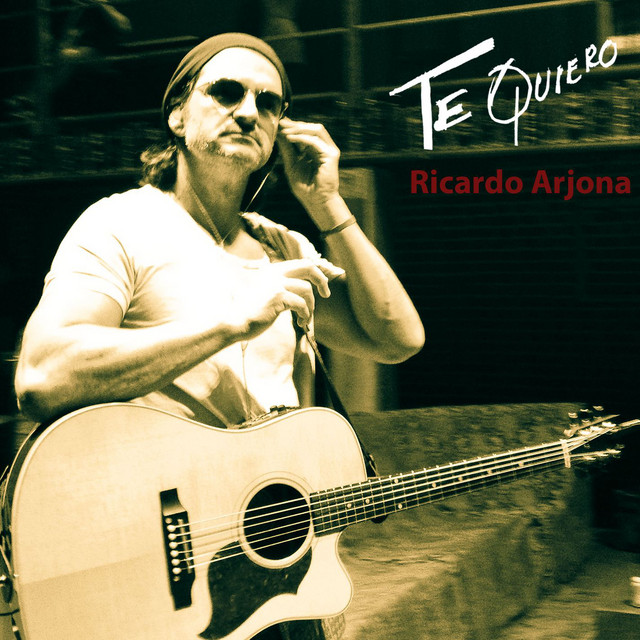
RICARDO ARJONA, “TE QUIERO”

22nd September, 2012


I loved Arjona's first #1 from the Independiente album, which I called "a literary prank in pop-song clothing," the bracingly cynical "El Amor." But it's the rare pop craftsman who entirely refuses to acknowledge on which side his bread is buttered, and this, the fourth single from the album, is a straightforward love song, with less of the usual literary wordplay and more simple sentiment than he's ever deployed in this travelogue before. It's as if he knew it would be his last chance to spend a week at #1 before the chart changed over to streaming data, and so he gave his fans the big anthemic I-love-you song they wanted -- and the video underlines this with a live rendition in Buenos Aires, with thousands of beautiful young Argentines caught on camera singing along with tears in their eyes.

Sad to say, it leaves me almost entirely unmoved -- I've made my criticisms of Arjona's very standard rock-derived production and singing styles before, and this performance lives up to every one of them. As with all Arjona songs, the pleasures are in the abstract, intellectual construction of the songs and not in the bodily surge that carries me along with them.

Because there's not none of that literary wordplay: but because it all circles tightly around the very simple phrase "Te Quiero" (I want/love you), there's less to say about it. The ultimate effect is that of a Leonard Cohen song being performed by late-period U2: the mismatch between the intelligent self-composure of the lyrics and the generic overwroughtness of the performance is kind of interesting, but not so much that it bears repeated exposure.

Only one song left before streaming data takes over and pummels the relatively diversity of genre, nationality, generation and audience that the old Hot Latin chart once championed into an indistinguishable paste. Let's hope it's a good one.

31.10.22

RICARDO ARJONA, “EL AMOR”

22nd October, 2011


After a couple of entries talking about the lowbrow influence of hip-hop and more particularly the English language, it's something to turn to one of Latin Pop's Very Self-Serious Singer-Songwriters and get what is essentially a literary prank in pop-song clothing.

"El Amor" is probably one of the most common titles in Spanish-language pop, just like its English-language equivalent "Love" would be. The ballad tempo and swelling instrumentation encourages the listener to expect that it will be just one more oblation placed on the altar of popular music's most revered ideal and patron, romantic love. Even Arjona's vocal phrasing gives nothing of the game away: if you don't know much Spanish or don't pay attention to lyrics, he could just be singing earnestly in praise of love. Even the first few lines could go either way:

"El amor tiene firma de autor en las causas perdidas / El amor siempre empieza soñando y termina en insomnio" (Love has an author's signature in lost causes / Love always begins by dreaming and ends in insomnia")

So far, so conventional; this is the Renaissance-era "love is madness, but oh how sweet" sentiment. Which is a bit more old-fashioned than the ususal Romantic-era oaths of heroic devotion which is where most contemporary pop language ultimately derives from, but still fits comfortably within the pop canon. But it's the next lines that makes Arjona's intentions clear:

"Es un acto profundo de fe que huele a mentira / El amor baila al son que le toquen, sea Dios o el demonio" (It is a profound act of faith that smells of lies / Love dances to the tune of the one who plays, whether God or the devil")

Now this is bracing cynicism, of a kind which is not unknown in Spanish (or any other European) literature, but extremely rare in pop. My metaphor earlier of the devotional altar which pop has erected to romantic love is only somewhat hyperbolic; despite the strenuous efforts of many songwriters, it could easily be argued that the bulk of pop musicians are really just an adjunct of the falling-in-love industry, like diamond miners, florists, and interior decorators.

It's tempting to quote and translate the rest of the lyrics here, but I'll limit myself to the chorus:

"El amor es un ingrato que te eleva por un rato
Y te desploma porque si
El amor es dos en uno que al final no son ninguno
Y se acostumbran a mentir
El amor es la belleza que se nutre de tristeza
Y al final siempre se va"

(Love is a churl that raises you up for a short time
And lets you down just because
Love is the two-in-one that in the end add up to nothing
And accustom themselves to lying
Love is the beauty that nurtures itself on sorrow
And in the end always goes away)

The video matches the cynical tone of the lyrics perfectly: a black-and-white film of a wedding taking place in a venerable cathedral in Mexico City, with Arjona singing at the organ, in the pulpit, and in a pew: while the bride and groom kneel before the officiating priest, the couples in the audience glance, squirm, bicker and finally break out into an enormous brawl while the music crashes around them, while the bride flees down the aisle. But then Arjona stops singing, and everything is back to normal: it was all in the bride's head, and she looks nervously around while the rice is thrown as they descend the church steps.

In an interview, Arjona even claimed that the song was meant as a corrective to the general trend of pop: "So many good things about love have been shown, that somebody had to turn it around and tell the bad ones." It was also the lead single off of his new album after going independent, and the song's rejection of typical sentiment is very much in line with an artist's rejection of label pressures and demands. But it was also a return to his classic rock-ballad style after a politically-engaged, stripped-down tropical album, the singles from which (about Cuba, autobiographical, and about sex) had failed to catch fire commercially; a certain amout of cynicism on Arjona's part no doubt felt earned.

The cynicism worked, of course, and shot him to #1, even if only for a week. It's by far my favorite Arjona song I've met on this travelogue, although since learning about the Poquita Ropa singles I can only mourn not getting to write about them too. The chart won't have time for Very Self-Serious Singer-Songwriters much longer, though, and it's nice to appreciate them while I still can.
8.1.18

RICARDO ARJONA, “EL PROBLEMA”

7th December, 2002

Wiki | Video

Ricardo Arjona's relatively complex and poetic singer-songwriter rock has been a necessary counterweight to the more demotic and direct millennial-era pop which had largely enveloped the top of the Hot Latin chart over the past few years; but this, his biggest-ever hit, is as direct and pounding as any dance song, even if the lyrics' simple structural conceit is still a highly poetic one.

The bulk of the song is made up of couplets whose lines begin "El problema no es que..." and "El problema es que..." (The problem is not that... / The problem is that...), in which the first line describes a difficulty about the beloved, and the second details how it impacts the lover. From the first, relatively benign line "The problem wasn't not finding you / The problem is forgetting you," it grows increasingly obsessive and even masochistic, until lines like "The problem isn't that you hurt me / The problem is that I like it" and "The problem isn't the wounds / The problem is the scars" signal, if the repetitive pounding rock of the music and Arjona's grainy shouting hadn't already, that we're in darker territory than usual.

The music, though, is more varied and even uplifting than just "pounding rock" -- a gospel choir gives its usual unearned gravitas to Arjona's distorted self-pity, and crisply funky piano and guitar runs recall the Rolling Stones at their decadent peak in the early 70s. Arjona's classic-rock instincts work for him on "El Problema," as his first-person character edges into the same kind of psychological unpleasantness that Jagger's protagonists plumbed regularly. None of which really explains why it was such a huge hit in 2002 and 2003: even Arjona, who made it the lead single off Santo Pecado (Holy Sin) was befuddled by the song's success, claiming he never expected it to be played on radio. Maybe it's as simple as that there's a greater hunger for emotional masochism in the pop audience than is generally assumed: I know I relate, strongly.

6.3.17

RICARDO ARJONA, “CUÁNDO”

7th October, 2000


We met Guatemalan singer-songwriter Ricardo Arjona earlier in 2000 with a beautiful modern-rock (modern for the 90s) ballad. But it was from his last album, and his new album was Galería Caribe, or Caribbean Gallery, a showcase of his versatility with the multi-colored musics of the tropical islands. Or, perhaps, his lack of it.

"Cuándo" (When), for example, is nominally a bolero, the swaying Cuban lilt that became the glory of midcentury Mexican popular song; but while the congas tap out a swaying rhythm, it's an awfully stiff one, practically 4/4, an unadventurousness which clarifies when electric guitars start revving up in the middle eight, and the song reveals itself as just another power ballad wearing tropical-Caribbean clothes. The muted trumpet, the acoustic guitar runs, the swooning strings, and the conga percussion is all beautifully performed and expertly knit together, but underneath it all is a guy in a flannel shirt whose musical instincts never stray far from the repetitive blues-based structures of classic rock.

With that disappointment, it's a surprise that "Cuándo" is still as good as it is, not just as a piece of production, but as a song. Ricardo Arjona can write a smart lyric, as we knew as far back as 1994, and "Cuándo" is a major performance in lyric-writing. The opening lines, "¿Cuando fué la última vez que viste las estrellas con los ojos cerrados / y te aferraste como un náufrago a la orilla de la espalda de alguién?" (When was the last time you saw the stars with your eyes closed / and clung like a castaway to the shore of someone's shoulder) present much more thoroughgoingly poetic imagery than Anglophone pop usually has room for, even beyond the obvious sexual allusions.

The rest of the song turns into rather a scorned-lover diatribe, but Arjona's closer to Dylan than to Morrissette in that category, and if it weren't for his plodding rhythm and rather anonymous voice, "Cuándo" could be a great, rather than just a good, song.

20.10.16

RICARDO ARJONA, “DESNUDA”

5th February, 2000


I've been spending a lot of time lately with the literary movement that Spanish calls Modernismo, which is a different beast from the Anglo-Celto-American novels and epic poems we usually refer to as modernism in English: primarily a poetic flowering (the Nicaraguan poet Rubén Darío kickstarted it in the 1880s), influenced by the French Symbolists but without the strict metrical heritage to rebel against (and so equally influenced by the French Parnassians), deeply romantic in the Harlequin-novel sense as well as the Keats-and-Shelley sense, and very much a Europe-oriented movement, with its its Latin American poets and feuilletonists like Leopoldo Lugones or Horacio Quiroga just as identified with their nations' European elite as Spaniards like Antonio Machado or Juan Ramón Jiménez. It's a whole world of literature I was largely unaware of before the past year, but which my newly-discovered facility with reading Spanish has opened up to me, and which I'm still excited to explore.

I bring all this up because Ricardo Arjona is from Guatemala, but his music is not particularly Guatemalan. Like Enrique Gómez Carrillo, the Guatemalan Modernista poet who spent his career in Europe boosting the Estrada Cabrera dictatorship, Arjona is an internationalist, which (in Latin America) is to say a European; and if I'm particularly sensitive to this point in regards to Guatemala when it doesn't necessarily bother me from any other Latin American nation, it probably has more to do with my own bad conscience towards the place I spent my teenage years than with Guatemala's particular ethnic or aesthetic identities.

But I also bring it up because Arjona is himself a Modernista, aesthetically if not chronologically: "Desnuda" could have been written by Jiménez or Darío, it so thoroughly examines its central image ("desnuda" can be both the adjective "nude" and the imperative "take [your] clothes off") and complicates it, turning it inside out so that a shedding becomes a filling up, and he applies all the rhetorical tricks at his disposal to convince his apparently shy lover of the naturalness, the profitability, and the giddy lunacy of nakedness.

It's one of the best lyrics we've encountered in this travelogue, judged simply as a lyric, poetic and erotic and funny, so it's a bit disappointing that the musical backing is so soft-rock standard. It's as professional and tasteful as Arjona's text, with Elizabeth Meza's harmonies and wordless sighs adding erotic weight to the guitar curlicues and accentuating percussion. Arjona's voice is a fine, burnished instrument in the post-stadium rock tradition -- a little gritty, a little sensitive -- but his performance doesn't live up to his writing. He's a generic Western singer, in other words, which is why I think of him as failing to be particularly Guatemalan.

But Guatemala is not one thing. (Nothing is ever one thing.) Although it is has one of the largest indigenous populations by percentage in the Americas, it is just as much a Western nation as Argentina, or yes, the United States -- if we want to talk about non-Western nations as those with impoverished underclasses, stratified by race and language, that's not a conversation that will flatter the traditional great powers. Art for art's sake has historically been the province of the elite, in every culture, and at least in Arjona's case, his mass art, blanketing radios, constantly on tour, and accessible via every cell phone in the hemisphere, is more widely available, and more widely beloved, than that of any of the precious, finicky Modernistas of a century before.

21.10.10

YURI, “DETRÁS DE MI VENTANA”

29th January, 1994


The album cover above is a riot of color; and indeed, her two previous number-one singles were riotous and colorful, two of the best dance songs to have been featured in this travelogue, in which dance songs are almost always good. But this is no dance song. If the comparisons I made then with Madonna hold good, those earlier hits were comparable to "Holiday" or "Material Girl" — and this is closer to something off Erotica or Bedtime Stories, a serious examination of sexual relations between adults, in which the moral force of feminism and the narrative force of pop are joined in a work of surprisingly complete power.

But before we dive into the song, a word on its composer. Ricardo Arjona isn't a name most English-language pop fans know — and even here, we won't meet him as a performer for several years yet — but he'd been gathering fame in Latin American circles since 1989, when his first regional-hit album, Jesus, Verbo No Sustantivo (a pun on the religious and grammatical meanings of the word verbo) was released. He was a star in Guatemala, where he was born, where he was a local basketball star, where he taught secondary school for a time, and like regional stars everywhere — especially those with songwriting talent — he was essentially on a farm team to the pop establishment. This was his first song to gain wide exposure throughout the Spanish-speaking world, and both as a piece of songwriting and as a cultural event, he could hardly have made a better shot.

Yuri sings in character as a woman, as a wife, tired of a loveless, sexually unfulfilling, and oppressive marriage: each verse begins with the words "ya me cansé" ("now I'm tired," in the sense of "sick and tired") and lists her grievances: he doesn't look at her, doesn't touch her, she feels the walls closing in, she only knows she's a woman because she does the dishes — and that's just the opening line. The whole thing is a magisterial portrait of Betty Friedan-esque rage at patriarchal oppression and (even more damning) at conjugal impotence, both figurative and literal. The final words of the chorus, "contigo pero sola" ("with you but alone") are a brilliant condensation of the emotions of a (traditional) woman trapped in a (traditional) marriage. Latin Pop is about nothing if not tradition, but neither Arjona nor (at least at this stage in her career) Yuri was interested in shoring up the traditions. Like Ana Gabriel, whose signature rasp Yuri occasionally approximates here, they smuggle genuinely countercultural content into what could be understood, if you weren't paying attention, as a standard romantic lament.

It's a powerful performance, and the production, crisp and billowy, with plenty of space and pulsing crescendos, matches it. The thin plasticity of the 80s, where we began, is far in the rearview now. We've reached 1994, and the future's never been brighter.